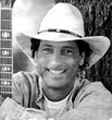
A Not-So-Brief History and Reflections
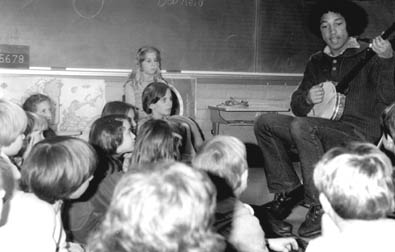
I
have lived in the Monterey Bay area for the past 27 years. I was
actively involved in the folk music world in the San Francisco Bay Area
and the Monterey Bay Area. I initiated a popular Folk Music Festival and
a coffee house at Monterey Peninsula College. I began working in schools
for the Monterey Peninsula Museum of Arts mobile art exhibit called
�Museum on Wheels.�
I found I enjoyed working with children and that they found
something in me that they were powerfully drawn to. I believe it was
partially that I was a rare male in the elementary school world of
females, but beyond that, it was clear that something good was
happening. I continue to strive to understand what that is.
I moved to Santa Cruz around 1977 and began performing in
restaurants/bars/pizza joints in the area, such as Portola House,
JJ�s, Hindquarter, and Watsonville Mansion House. I hooked up with
fellow folkie Mark Bradlyn and we performed together as Bradlyn &
Reid for a while, performing at the Woodshed in Felton, and Doc Ricketts
on Cannery Row. About this time, Bradlyn & Reid began one of its
long extended vacations and I stopped performing.
I
worked with Kenny Hill at Wooden Music in Capitola, a time I look back
on fondly: Kenny, Gil
Carnal, Larry, Maryanne, and Joe Hassen. It was a time rich in all but
money. Kenny and Gil were building guitars, Larry was making and
repairing violins, Joe was buying, selling and renting pianos, and I was
doing instrument repairs. It
was a time of magic. Brief, and electric. Not easy magic! Times were
lean. But magic nonetheless. I remember the sound of clogs on the cement
floor. Walking down to Polar Bear for ice cream while I waited for a
glue job to dry. Listening to Kenny and Gil speaking in Spanish because
Swiss-born Gil resisted English. Gil�s tales of sailing.
One of Kenny�s guitar students, Beverly Grova, informed us
about the �Artist in the Schools� program that was beginning in
Santa Cruz (SPECTRA). It was still a year off, but it rekindled my
energy for working with kids. I had led some field trips to our shop and
gone out to a couple of schools to do demonstrations of how a guitar is.
I always included singing a few songs. To get a jump on the application
process, I began volunteering in local schools. I requested only a
letter of recommendation from the teachers in exchange.
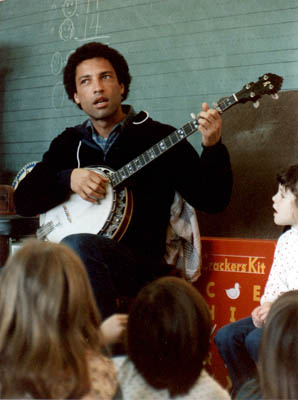
My reception in the school offices was pretty erratic. One
principal told me that the only thing wrong with my coming was that I
had to ask him. He said that if he were doing his job he would know
about resources like me in his community. Other times principals would
hide in the teacher�s room to avoid talking to me. They never
prevented me from working with their students though. By the time
SPECTRA was taking applications, I had a pile of letters of
recommendation and had been in many of the schools in the area.
I took my stack of letters and went to my interview, which was
disastrous. The panel wasn�t too certain about how to do what they
were doing, and I certainly had difficulty explaining just what it was I
did with those songs. Finally, Beverly, who was part of the panel, asked
if I had brought my guitar. I went to the car to get it, and after
playing a couple of songs, everyone relaxed and felt they understood my
value in classrooms. It�s
still something that�s difficult for me to confine to words. By the
end of the first year I was one of the program�s most requested
artists. The SPECTRA program was successful in large part to the work of
about a dozen of the 70-some artists who actually did most of the work
the first few years. I am
proud to have been among them.
Since assemblies didn�t allow me to get to know many children,
I only wanted to do classroom workshops. In order to survive, I would
often do 6-7 classes in a day. It was grueling, but the kid�s energy
would refresh me. I had California Arts Council Residencies at Aromas,
Bradley, Rio Del Mar, and Valencia Schools, long-term residencies at
Green Acres, Santa Cruz Gardens, Soquel, Capitola, and Mar Vista. I had
the opportunity to work with many people � adults and children � and
to become skilled at working in the school environment. Later I was
artist in residence in the Los Gatos and Saratoga school districts.
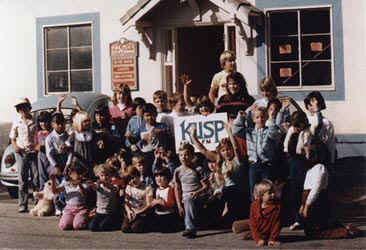
I was performing weekly on KUSP�s Saturday�s Child radio
program with Jo Ann King, Safiya Williams, Dale, and Billee Harris. We
became one of the most popular shows on the station due largely to my
presence in the schools. I would invite kids to the radio station and,
if they couldn�t come down, they could listen and call in requests. It
was a way to empower them and make media accessible to them. It has
always been important to me to help people feel more capable, more
empowered, and to have an effect on their world.
One of the results of my experiences with performers who present
themselves as special is that those in the audience may well see
themselves diminished as they exalt the talent of the �special�
person they watch perform. I want people, whether child or adult, to see
what I�m doing and feel that they could do it too. When I was 12 years
old and my school took us to the Berkeley Folk Festival and I saw Pete
Seeger perform. He was a real, accessible person doing what he loved to
do. He helped me identify a choice I wasn�t aware of until then.
Growing up, my mother played guitar, sang, and wrote songs. She
performed with Joe McDonald and Malvina Reynolds and was at one point
being groomed for a singing career. She bailed out after an upsetting
experience in New York and informed me, �That�s not a real job.�
It took me a long time to get past that for myself.
My Dad retired from playing football and opened a record store
with his uncle. They sold gospel, jazz, rhythm and blues records to a
pretty exclusively black clientele. The only white person I ever saw in
the place was the mailman. My Dad also promoted concerts � mostly
gospel music. Mighty Clouds
of Joy Soul Singers, Staple Singers, James Cleveland, Cleophus Robinson,
C.L. Franklin � pretty impressive stuff.
I realize now that I have a deep experience of the difference
between people singing for a job and singing out of belief and
conviction. (Not that I didn�t believe in Chuck Berry, Sam Cooke, and
Rick Nelson, �cause I did.)
It was clear to me in my work with children that what was the
accepted norm for �children�s music� was a rehash of the same old
songs. Everywhere you heard the same tunes, badly sung. If you want the
kid�s attention, be funny, gross, sing about magic, ponies, rainbows.
When
I made my recordings (Bob Reid with Abracadab, Marz Barz, and We
Are The Children), I wanted to expand the idea of what music for
children could be. I knew that one of the things children were hungriest
for was respect. They wanted to be acknowledged as having a legitimate
experience of the world. They walk down the same streets, see the same
things. They, however, have not yet learned what not to look at. What to
avoid. They are in the process of becoming less connected with their
personal experience of the world. I would like to think that it is my
job to combat that. I would
like them to feel that their individual experience of the world is valid
and important. There are many forces surrounding them that make this
difficult.
School
as an institution is not meant to foster individual strength and
identity. School is a deterrent to individual thought. School helps you
to be part of the group, even if that group is a band of renegades.
School
trains you to be dependent upon authority. You will be told what to
think and when to think. This is the real function of school. There is
also some �academic training,� but, when you look at how the
education of those who have real power is undertaken, it is quite
different.
I
suppose it may have been confusing to those I have encountered along the
way who have been challenged by me for not taking up the hammer. I take
my work with children very seriously.
As
I tell my audiences these days, I used to think that I worked with
children. Now that I�ve been doing this for over 25 years, I realize
that I work with adults before they grow up.
My
performances are as much for the grownups as the not-yet-grown. Pieces
of my school assembly are there to assist those who work with children
in resisting the temptation to compress children�s spirits to make
them easier to work with.
I
have been lucky to have had the support of wonderful parents, teachers,
principals, superintendents and many, many friends who I first met as
children.
My
work has enabled me to work with children in various parts of the United
States, the American School in Puerto Vallarta, Mexico, host a
television program, and make friendships with other performers whose
work I respect and who respect mine.
I
believe that I have an opportunity to make this faint conversation more
audible. I am hoping that by gathering together and talking about what
value people have seen in my work, it will help me to communicate what I
have been reluctant to limit to words. I am hopeful that through the
conversation others will be inspired and energized.
�Bob Reid
February 2001
|